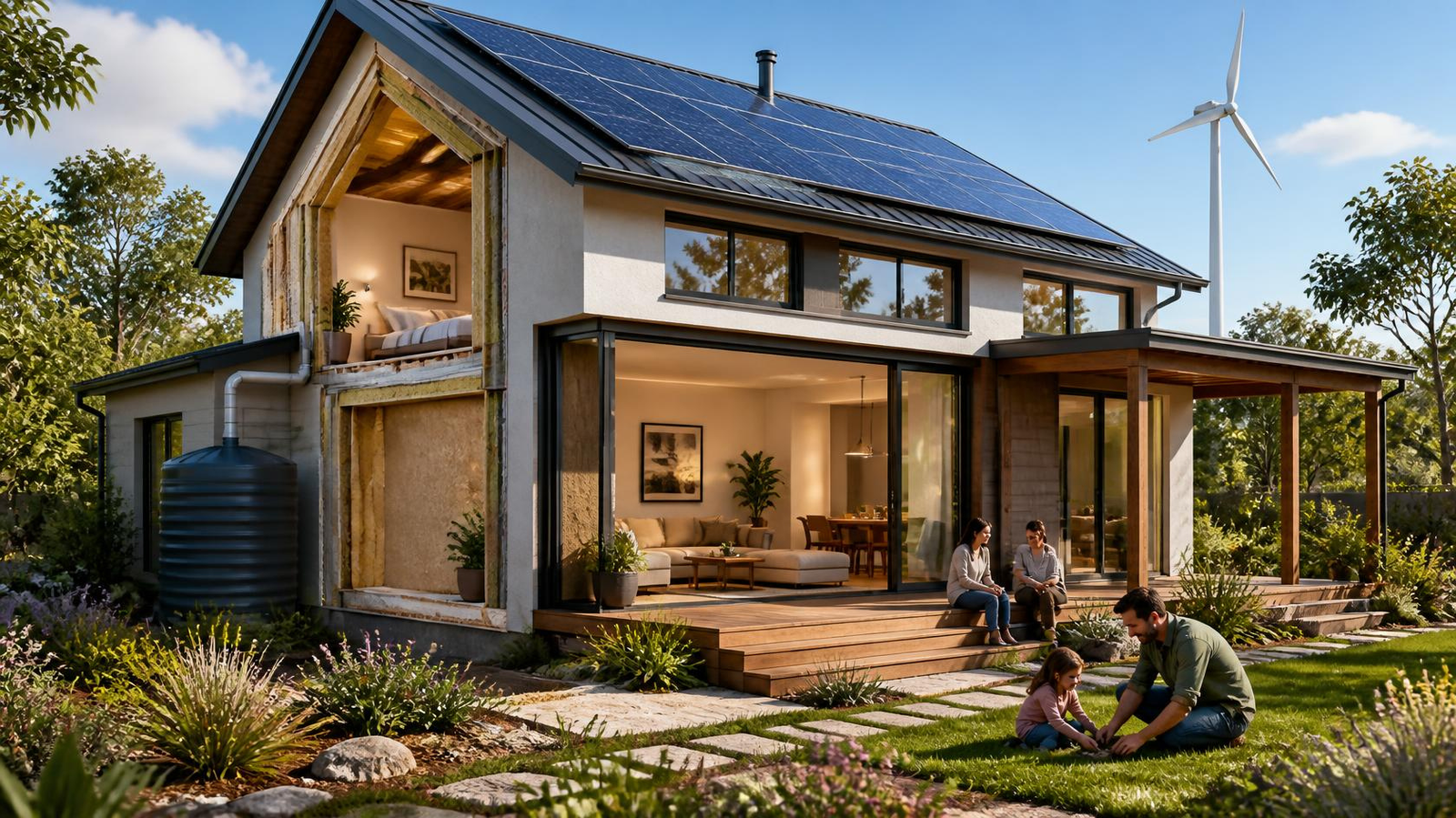
Energy & Eco-Friendly Living
Other Ways to Save Energy
Adopting an eco-friendly lifestyle beyond the usual advice—smarter cooking, greener power, better light, and less clutter.
Most households already know the familiar energy-saving script: turn the thermostat down a degree, draught-proof the letterbox, wash at thirty. Those habits still matter. Yet an eco-friendly lifestyle opens quieter routes to lower kilowatt-hours—choices about how you cook, who supplies your electricity, which bulbs glow above the table, and how much stuff you keep circulating through the house. Saving energy is not only a technical problem; it is a pattern of daily living.
Below are four practical paths that sit slightly outside the default checklist. Together they show how an eco-friendly home can feel warmer in spirit while drawing less from the grid: efficient cooking that tastes better, a green energy supplier that matches your values, LED light that pays for itself, and a minimalist approach that lightens both the bill and the mind.
1. How Air Fryers Save Energy—and Cook Healthier, Tastier Food
A conventional oven is a small room you heat for one tray of chips. It takes time to reach temperature, radiates heat into the kitchen, and often runs longer than the food needs. An air fryer works differently: a compact chamber, rapid circulating hot air, and a much smaller thermal mass. For many everyday meals—roast vegetables, chicken pieces, frozen foods, reheating leftovers—you use less electricity because you heat less empty space for less time.
Independent comparisons commonly find air fryers using around half the energy of a full-size electric oven for similar portions, especially when you are not batch-cooking for a crowd. Preheat is short or unnecessary. Cooking times shrink. In summer, you also avoid turning the whole kitchen into a sauna, which can reduce the temptation to run a fan or open every window while the oven blasts away. That is real energy saving nested inside an ordinary Tuesday supper.

A smaller heated chamber means less wasted electricity for everyday meals.
The eco-friendly lifestyle bonus is flavour and health, not only watts. Circulating air crisps surfaces with little or no added oil, so you keep the crunch people love without deep frying. Vegetables caramelise; proteins brown; leftovers revive without turning soggy. You cook healthier food that still tastes indulgent—an easier habit to keep than a diet of bland “virtuous” meals nobody finishes. When the appliance earns its place on the counter because dinner is better, the energy saving sticks.
Use it wisely: match basket size to portion, avoid running it empty, and still reach for the big oven when you truly need capacity. An air fryer is not a moral badge; it is a tool. In an eco-friendly kitchen, tools that shrink heat load while raising meal quality are among the most satisfying upgrades you can make.
2. Swap to a Green Energy Supplier—and What People Actually Save
Switching supplier does not change the electrons in your sockets overnight, but it does change which generation and investment your bill supports. A green energy supplier prioritises renewable sources—wind, solar, hydro—and often backs new clean capacity rather than only buying certificates on paper. For households building an eco-friendly lifestyle, the switch is one of the highest-leverage moves that requires no DIY and no new gadgets.
In the UK, several well-known options make comparison straightforward. Three examples worth researching (always check current tariffs, exit fees and fuel mix on their sites):
- Ecotricity— long-standing green supplier investing in British wind and solar, with a strong environmental brand.
- Octopus Energy— large renewable-focused supplier known for competitive tariffs, smart tariffs and transparent customer tools.
- Good Energy— 100% renewable electricity offering with a focus on supporting independent UK generators.

Knowing your usage makes green tariffs easier to compare and stick with.
How much do people actually save? It varies with region, meter type, usage and the market at the moment you switch. Comparison sites and Ofgem-style guidance often show that moving off an expired fixed deal or a costly standard variable tariff can cut annual dual-fuel bills by tens to a few hundred pounds for a typical household—sometimes more when the gap between deals is wide. Green tariffs are not automatically the cheapest every week of the year, but many renewable suppliers now price competitively with the wider market. The honest frame: you may save money, you may pay a modest premium for a cleaner fuel mix, or you may do both over time as smart tariffs reward off-peak use.
Pair the switch with a quick usage audit. A smart meter or simple monitor reveals standby loads and peak spikes. An eco-friendly lifestyle treats the supplier change as the foundation, then trims demand so every renewable kilowatt goes further. Check for exit fees before you move, use a trusted comparison route, and read the small print on “green” claims so your money backs generation you believe in.
Start Saving Energy Today
Browse energy-efficient essentials that help lower your bills and support a more sustainable, eco-friendly home.
Energy Efficiency Shop3. How Much Energy LED Bulbs Really Save
Lighting is one of the clearest wins in home energy saving because the technology leap is so large. Quality LED bulbs typically use around seventy to eighty per cent less electricity than traditional incandescent bulbs for a similar light output, and substantially less than many older halogen fittings. A classic sixty-watt incandescent might be replaced by an LED drawing roughly eight to ten watts—same glow on the page, a fraction of the draw on the meter.
Longevity multiplies the benefit. LEDs often last fifteen to twenty-five times longer than incandescents, which means fewer replacements, less packaging, and fewer trips up the ladder. Over a decade, a whole-home swap can shave a noticeable slice off electricity use—commonly cited household figures land in the range of tens of pounds a year depending on how many lamps you run and for how long, with larger savings in homes that still lean on old bulbs or leave lights on in halls and landings.

Swap the bulbs you use most first—kitchen, hallway, bedside— for the fastest return.
Choose warm-white LEDs (around 2700–3000K) for living rooms and bedrooms if you want a cosy feel; cooler task light suits desks and utility rooms. Look for decent colour rendering so food and fabrics look natural. Dimmable LEDs need compatible dimmers—mismatches cause flicker and early failure. An eco-friendly lifestyle treats lighting as atmosphere and efficiency together: you are not condemned to clinical glare in order to save energy.
Start where hours of use are highest. One LED in a lamp that burns every evening outperforms six bulbs in a rarely opened cupboard. Combine with daylight habits—open curtains, pale walls, task lamps instead of flooding every room—and LED savings stack with behaviour. The greenest lumen is still the one you never need to switch on.
4. How a Minimalist Lifestyle Saves Energy, Clears the Mind and Helps the Environment
Minimalism is often framed as aesthetics—white walls, empty shelves, a single vase. In practice, an eco-friendly minimalist lifestyle is a systems change. Fewer possessions mean fewer objects manufactured, shipped, heated, cooled, lit, cleaned and eventually discarded. Every spare gadget on charge, every seldom-used appliance humming on standby, every overcrowded room that needs more lamps to feel usable carries an energy story. Owning less shortens that story.
Energy saving shows up in small, cumulative ways. A clearer kitchen needs less task lighting to find what you need. A wardrobe you can actually see discourages panic purchases and the logistics of returns. One reliable kettle beats three half-broken spares. Storage heaters of clutter—lofts, sheds, spare rooms packed with “maybe someday”—are spaces you still insure, occasionally heat, and mentally maintain. Decluttering is not only a skip run; it is a quiet reduction in the household’s operational load.
The mind notices first. Visual noise elevates low-grade stress; decision fatigue thrives in overflowing drawers. When surfaces breathe, attention settles. Sleep improves in simpler bedrooms. Work focuses at uncluttered desks. That mental ease is not a luxury add-on to sustainability—it is what makes eco-friendly habits sustainable for humans, not only for carbon spreadsheets. People keep practices that feel lighter.
Environmentally, minimalism works upstream and downstream. Upstream, you buy less virgin material and fewer trend cycles. Downstream, you send less to landfill and recycling streams already under pressure. Choose durable, repairable, cruelty-free and eco-conscious pieces when you do buy, and the footprint of each remaining object falls further. Space becomes a resource again: room for plants, for daylight, for people—not for packaging you forgot to open.
You do not need a stark empty house to benefit. Start with one category—cables, mugs, cleaning products—and let usefulness be the filter. An eco-friendly lifestyle and a minimalist one meet where intention replaces accumulation. Energy bills, mental load and planetary impact all respond to the same question: does this earn its place in my home?
Ready to live with less—and lighter energy use?
Explore biophilic design, conscious choices and calm spaces that support a truly eco-friendly home.
Explore the BlogBringing It Together
Saving energy through an eco-friendly lifestyle is rarely one heroic renovation. It is an air fryer humming through a weeknight roast, a green supplier on your direct debit, LEDs in the lamps you actually use, and cupboards that no longer demand constant management. Each choice is modest; together they reshape demand, bills and the feel of home.
Begin where friction is lowest. Cook one meal in the smaller appliance. Compare three green tariffs. Change two bulbs. Clear one surface. Momentum compounds faster than perfection—and the grid, and your nervous system, will both notice.
Keep Building Your Eco-Friendly Home
Browse practical guides and thoughtful products that support lower energy use and calmer, more sustainable living.