Eco-Friendly Living Guide
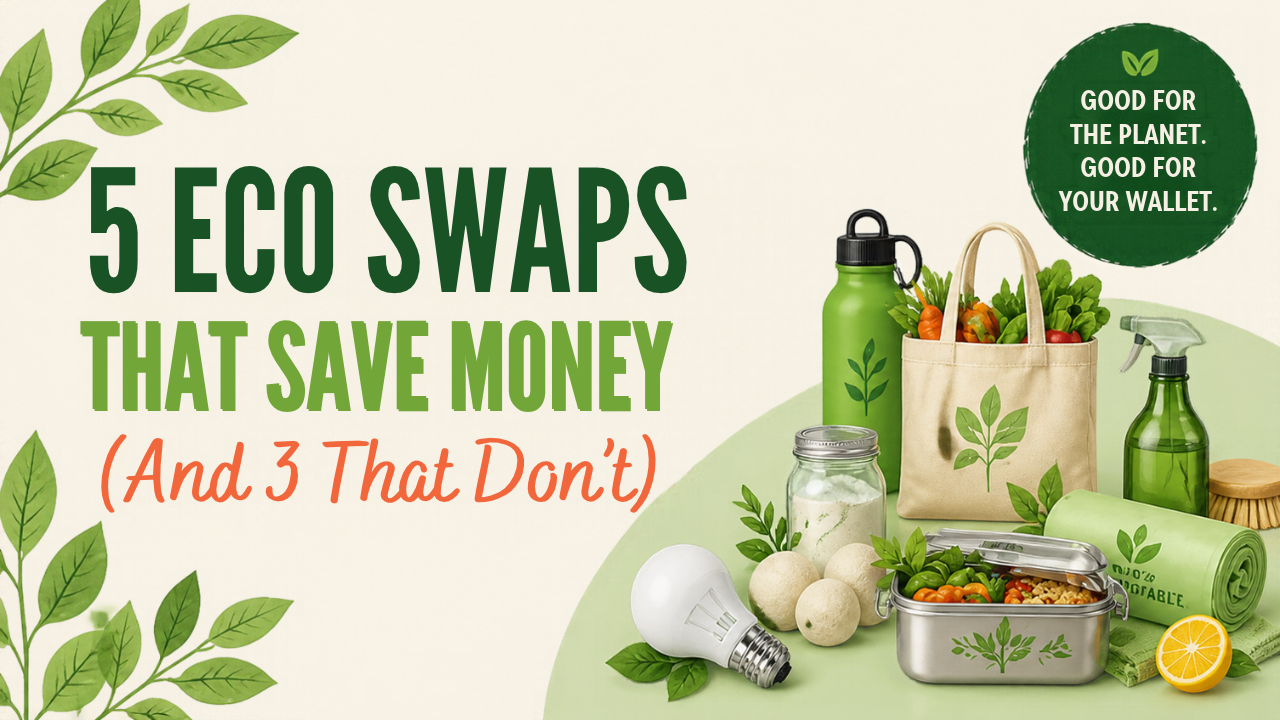
5 Eco-Friendly Swaps That Save Money (and 3 That Don’t)
Good for the planet, better for your budget: the everyday changes worth thinking about.
Eco living can feel expensive. Between premium refills, beautiful bamboo accessories and the latest reusable everything, a greener basket can quickly become a pricier one. Yet some of the most useful eco-friendly swaps are also the simplest: they reduce what you buy repeatedly, help you use what you have, or make an everyday habit less wasteful.
Here are five changes that could save money, followed by three that may not pay you back. The prices and savings below are examples, not promises: your costs, habits and choices will shape the outcome. Think of them as a starting point for your own sums.
The 5 eco swaps that can save money
Choose the swaps you will genuinely use; the best savings build through everyday habits.
1. Bar shampoo instead of bottled shampoo
A shampoo bar can be a small change with a surprisingly long life. As an illustrative comparison, imagine a £2 bar lasting three times as long as an £8 bottle. If you would otherwise buy eight bottles in a year, those bottles cost £64; three bars at £2 cost £6, saving roughly £58, or about £60. That assumes the bars really do last three times as long and suit your hair.
Actual prices, usage and results vary enormously. Let the bar dry between washes, and try one before stocking up. The saving comes from buying less often, not simply from choosing a bar.
2. Reusable food wraps instead of cling film
A set of reusable food wraps might cost around £12 once. If it lasts a year and replaces the cling film you would otherwise buy, you avoid those repeat purchases. Whether you actually save money depends on how much film you use and what it costs; a household that rarely uses cling film may not recoup £12 in a year.
Beeswax or plant-wax wraps are useful for covering bowls, wrapping sandwiches and keeping cut fruit fresh. Follow the care instructions: many need a cool wash and are unsuitable for raw meat or hot food. Containers you already own are another excellent, often free, option.
3. Library and second-hand books
A new book priced at £15 can be a lovely treat, but borrowing the same title from your local library is usually £0. Borrow four books instead of buying them at that example price and you could keep £60 in your pocket. Availability, reservations and local library charges can vary, so check your service.
For books you want to own, try charity shops, second-hand bookshops and community exchanges. A preloved copy is not always cheaper than a discounted new one, but it often gives a perfectly good book another reader. Returning borrowed books on time helps avoid any applicable charges.
4. DIY cleaner with vinegar and lemon
For light cleaning on suitable surfaces, a diluted vinegar-and-water solution with a little lemon can be inexpensive. An illustrative homemade batch might cost around 10p in ingredients compared with a £4 shop-bought spray, although concentrations, bottle size and ingredient prices change the calculation. Reuse a clearly labelled spray bottle and make only what you need.
This is not a substitute for a disinfectant where one is needed. Acids can damage marble, limestone and other sensitive surfaces, so check the manufacturer’s guidance and test first. Never mix vinegar or lemon with bleach or other cleaning chemicals; dangerous fumes can result.
Further reading: Natural Stone Institute: care and cleaning
5. A reusable water bottle and coffee cup
Refill a bottle you already own rather than buying drinks on the go and the savings can build quickly. A reusable coffee cup may help too: some participating shops offer around 20–50p off a drink. At 25p off twice a week, for example, that is about £26 over a year before the cost of the cup.
Discounts and participation vary, and some shops offer none at all. A sturdy bottle or cup only pays back if you use it often enough to offset its cost. Keep it clean, carry it with you and resist replacing it simply because a prettier one appears.
The 3 eco swaps that may not pay back
A green-sounding label is not always a shortcut to savings, or the full environmental story.
6. Expensive bamboo toothbrushes
A premium bamboo brush can cost more, and a handle may split if poorly cared for; it is not guaranteed to last longer. Many bamboo brushes still have nylon bristles, so they are not entirely plastic-free, though the handle can replace some plastic. Choose a comfortable brush you can afford and follow dental advice on replacing it.
Further reading: BBC Future: toothbrush materials
7. Trendy compostable phone cases
A compostable label does not guarantee a case will break down in your garden heap. Some products require industrial conditions, and collection facilities may not accept them. Check the specific certification and local disposal guidance. A protective case you already own can be the cheaper choice, especially if it keeps your phone working longer.
Further reading: UCL: home composting and compostable plastics
8. An organic cotton tote you never use
A UK Environment Agency study estimated a cotton bag needed 131 uses to match a conventional single-use plastic carrier bag on climate impact under its assumptions. That figure is not a universal threshold for organic cotton or every environmental impact: bag weight, production and reuse all matter. The practical lesson is simple: use the bags you already have.
Further reading: Environment Agency: carrier bag life-cycle assessment
Start with one money-saving swap
Eco-friendly living does not have to mean buying a whole new lifestyle. Start with one swap that fits your routine: borrow your next book, refill a bottle or use up the shampoo you already have before trying a bar. Give it a few weeks and notice what you really save.
Prices, habits and local services differ, so do your own sums before spending. The most sustainable choice is often the one you will use again and again. Small, realistic changes can be kinder to your wallet as well as the world around you.
A little change can go a long way.
Explore a practical eco-friendly option for your next everyday swap.
Which swap are you trying?